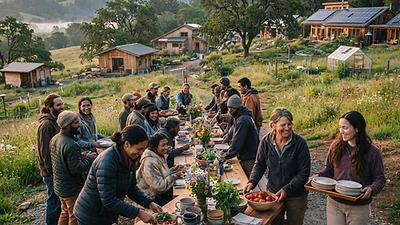
Across history, human beings have walked toward temporary horizons to celebrate, grieve, dance, and learn. Whether stepping onto the dust of a multi-day music festival or arriving at an off-grid sanctuary for immersive Treatments, our impulse to converge is foundational to social life. Yet every gathering is an ecological and social anomaly: a sudden, intense concentration of human metabolism dropped into a landscape that must somehow absorb it.
We often carry away profound memories, renewed creativity, and expanded worldviews. But what does the land absorb, and what do the people who live there inherit once the infrastructure folds and the convoys disperse?
The Direct Impact of Gathering
The environmental and social impact of festivals, retreats, and cultural gatherings is defined by a fundamental friction between temporary consumption and permanent geography. Research confirms that the single greatest ecological driver of collective events is attendee transit, with attendee transport generating up to 95% of an event's total carbon emissions when long-distance flights and private vehicular travel dominate.
Beyond atmospheric emissions, multi-day gatherings routinely overload local municipal sewage systems, disrupt native wildlife movement corridors, and displace resident communities through seasonal inflation. Simultaneously, however, intentional gatherings possess a unique social architecture: they can serve as living micro-laboratories for circular food networks, revitalize forgotten public assets, and build deep intercultural solidarity. The critical question is whether an event functions as an extractive monoculture or as an active catalyst for bioregional stewardship.
Why Event Footprints Matter in Everyday Life
Our choices around leisure and personal development do not occur in an ethical vacuum. Modern travel culture has increasingly framed experiences as clean, guilt-free alternatives to material consumerism. We readily forego buying goods in favor of booking transformative experiences, assuming memory carries no physical weight.

Yet temporary experiences rely on massive physical supply chains. The food served at an event commissary, the staging freighted across borders, and the tents pitched on living topsoil represent tangible resource flows. Understanding how gatherings impact host communities allows us to move beyond passive entertainment. It shifts our participation from consumer entitlement into conscious civic engagement, reshaping how we spend time, deploy our financial resources, and respect common ground.
The Core Tension: Catalysts Versus Extractors
Modern event production operates along an industrial supply chain. Understanding the structural footprint of our collective experiences requires disaggregating where ecological pressures actually originate.
The Transit and Waste Reality
While marketing materials frequently highlight compostable cups and vegan concessions, these surface initiatives address only a fraction of an event's ecological pressure. A systematic review published in the Journal of Sustainable Tourism establishes that transportation logistics overshadow all on-site operational initiatives. When thousands of people travel across continents or remote rural corridors, their transit creates an invisible atmospheric footprint that no tree-planting pledge can immediately counteract.
On the ground, physical waste presents an equally severe spatial crisis. In camping festivals and outdoor retreats, research by environmental consultancies shows that abandoned campsite infrastructure accounts for up to 80% of total physical waste. A culture of cheap, disposable tents and festival gear means thousands of kilograms of synthetic polymers end up in regional landfills that smaller municipal budgets must manage for decades.
| Impact Vector | Conventional Event Practice | Regenerative Event Practice |
|---|---|---|
| Attendee Transit | Decentralized private vehicle travel and uncoordinated air transit. | Integrated regional rail charters, group shuttles, and local-first ticketing. |
| Procurement & Food | National industrial suppliers with high food miles and single-use packaging. | Hyper-local agroecological farm sourcing and reusable wash-hub infrastructure. |
| Land Legacy | Compacted soil, abandoned gear, and stressed riparian ecosystems. | Spatial activation, ecological restoration, and land stewardship work days. |
| Economic Retention | Revenues leak out to international promoters and global booking agencies. | Revenues circulate locally through community-owned enterprises and fair wages. |
Ecosystem and Infrastructure Strain
Temporary population surges introduce acute infrastructural stress. Rural regions frequently lack the wastewater treatment plants necessary to process spikes in sewage. Untreated graywater, biochemical pollution from synthetic toiletries, and unmanaged human waste often infiltrate local watersheds, altering aquatic chemistry and threatening sensitive aquatic species long after participants return to paved cities.
The Economics of Place: Net Benefit Versus Extraction
Event organizers often justify substantial social and ecological disruption by pointing to gross economic turnover: fully booked regional Stays, bustling pubs, and regional fuel sales. However, institutional frameworks such as the OECD Recommendation on Global Events and Local Development insist on calculating net additional benefit rather than celebrating unadjusted financial gross receipts.

When an event lands in a fragile region, short-term economic gains are routinely offset by uncompensated costs. Municipal services—such as emergency medical staff, road maintenance, and sanitation crews—are diverted away from year-round residents. Furthermore, the rapid growth of destination wellness retreats has exacerbated housing shortages across rural and coastal communities, turning residential homes into short-term tourist rentals and displacing the very workforce that sustains local community life.
To counteract this, progressive organizations and local collectives are reframing their work around the concept of a positive handprint. Documented in studies by bodies such as Destination Canada, this approach asks not merely how an event can avoid harm, but how its presence can build durable capital for the host region—leaving behind enhanced renewable energy microgrids, permanent cultural centers, and strengthened public commons.
Supply Chains as Micro-Laboratories for Change
A gathering is essentially a temporary city. Because it concentrates food systems, waste management, energy generation, and governance into a compressed timeframe, an event can serve as a functional testing ground for circular practices.
When gatherings coordinate directly with local growers, regional farms, and independent Organic Eats, they create sudden, predictable markets that help agroecological farmers scale their production. Rather than relying on refrigerated logistics trucks hauling standardized food across national borders, localized procurement keeps monetary capital cycling within regional borders.
Moreover, when event production shifts from treating participants as passive spectators to engaging them as active participants, social behavior changes. Documented initiatives in community tourism indicate that inviting attendees into direct land stewardship—such as rebuilding traditional dry-stone agricultural walls, removing invasive plants, or planting native vegetation—fosters an authentic sense of belonging that discourages destructive site behavior.
Distinctions, Limits, and Trade-Offs
Assessing the true impact of our gatherings requires intellectual honesty; ethical event production is riddled with genuine operational compromises.

- Geographic Isolation: Many of the most restorative wellness retreats and nature-based Events specifically seek secluded, biodiverse sanctuaries to provide tranquility. Yet this deliberate isolation inherently necessitates carbon-heavy private transport and relies on fragile rural utility networks.
- Economic Survival: Numerous post-industrial or agricultural regions experience structural economic decline. Seasonal festivals often represent their primary economic lifeline, meaning strict ecological caps or event cancellations can severely threaten local merchant livelihoods.
- Organizer Resource Constraints: Unlike commercial corporate mega-gatherings, grassroots cultural producers and community organizers face severe financial limitations. Implementing comprehensive life-cycle assessments, closed-loop sanitization systems, and direct regenerative procurement is significantly more expensive than relying on standard commercial logistics vendors.
We must also acknowledge the limitations of current research. While waste volumes and vehicle tailpipe emissions can be measured with mathematical precision, the long-term cultural impacts—such as whether a transformative weekend retreat creates lasting pro-environmental civic behaviors once attendees return home—remain under-researched and difficult to verify.
Navigating Gatherings with Regenerative Intent
Becoming an intentional attendee requires looking beyond superficial marketing pledges like "carbon neutral" certifications or single-use plastic bans, which often mask systemic transit and supply-chain leakage. Instead, event-goers should evaluate gatherings through the lens of place-based reciprocity.
First, prioritize proximity. Gathering regionally within your own bio-corridor dramatically reduces transport emissions while deepening your relationship with surrounding ecological and cultural systems. When traveling further afield is necessary, choose collective overland rail or shared bus options rather than flying.
Second, interrogate how an event interacts with its host neighborhood. Does the production hire local labor at fair living wages? Are tickets made accessible to resident families, or does the gathering construct a gated enclave that excludes the host community? Support gatherings that treat their presence as an act of respectful guest-ship, where attendees commit to active, place-based stewardship rather than disposable consumer entitlement.
Questions to Ask Before You Book
Before purchasing a pass to a festival, signing up for a retreat, or traveling for a conference, examine the transparent evidence provided by the organizers:
- How does the event address transport emissions, and do they provide organized, collective overland transit options from major transport hubs?
- Are food and beverage services sourced transparently from local, agroecological producers, or outsourced to generic industrial catering providers?
- What specific, measurable protocols are in place to preserve soil integrity, manage human wastewater, and safeguard local wildlife habitats?
- How does the event demonstrate genuine accountability to the host community, ensuring that financial benefits remain local while public access to common spaces is preserved?
- Does the gathering invite attendees into meaningful stewardship, or does its operational model rely on an army of low-wage workers clearing up after passive consumers?
From Fleeting Spectators to Place-Based Custodians
Stepping beyond consumer-driven escapism requires unlearning the habit of viewing host landscapes as inert backdrops. When we pack our bags for a festival or immersive retreat, we are stepping into an existing web of ecological relationships and community histories that preceded our arrival and will endure long after we depart. The genuine metric of an event's transformative power is not the intensity of the sensory high it delivers, but whether it leaves the host bioregion more resilient, equitable, and vibrant than before the gates opened.
Ultimately, becoming an accountable attendee means choosing reciprocity over mere extraction. It invites us to interrogate our logistical footprint, demand transparency from producers, and arrive ready to offer our labor and care to the local commons. By treating our temporary gatherings as experimental ground for permanent, conscious stewardship, we turn our instinctive desire for communion into an engine for systemic renewal.
Frequently Asked Questions
How can I determine if a gathering or retreat is genuinely regenerative before purchasing a ticket?
Look beyond surface marketing like banishing plastic straws to evaluate how the organizers manage procurement, transport, and land impact. Authentic organizers share clear data on attendee transit programs, publish transparent supply chain partnerships with local farms, and openly discuss how revenues directly benefit the host community.
What is the most effective action an individual attendee can take to reduce their event footprint?
Address your travel choices immediately, as attendee transit accounts for the overwhelming majority of an event's environmental burden. Prioritize regional gatherings you can access via rail or coordinated coach transit, or establish high-occupancy carpools rather than flying long distances to remote locations.
Why do campsite abandonments happen at such high rates, and how can they be curbed?
The proliferation of ultra-cheap, single-use camping gear has detached attendees from the true material cost of manufacturing and disposal. Investing in durable, repairable equipment and utilizing communal gear-rental services directly prevents municipal landfills from shouldering tons of synthetic waste.
Does attending smaller boutique retreats automatically guarantee a lower ecological impact?
Not necessarily, as small-scale gatherings held in remote or fragile ecosystems can strain rural infrastructure and contribute to local housing displacement just as sharply as massive festivals. Evaluate boutique retreats based on their localized supply chain partnerships, water and waste processing systems, and relationships with permanent residents.