Consider the modern spa appointment: an ambient sanctuary scented with rare frankincense, wrapped in bleached Egyptian cotton, quieted by noise-cancelling insulation, and delivered by a therapist working on back-to-back commission shifts. We walk out feeling temporarily unwound, yet the wider landscape—ecological, social, and economic—remains entirely untouched by our relief, if not depleted by it.
For decades, commercial wellness has operated on an unexamined premise: that personal health can be purchased in isolation from the vitality of the world around us. Self-care has evolved into a private, consumerist retreat from systemic exhaustion—a transaction where stress is managed, but the roots of depletion are left intact.
Regenerative wellness replaces this extractive model with an ecological reality: human health is inseparable from living systems. At its foundation, regenerative wellness is the intentional alignment of personal care with the restoration of the ecological, social, and material networks that sustain life. It transforms care from an act of private consumption into an ongoing relationship of mutual replenishment—one where caring for the body actively revitalizes the practitioner, the supply chain, the immediate community, and the soil beneath our feet.
Why Systemic Care Matters in Daily Life
In everyday life, our personal exhaustion rarely exists in a vacuum. The chronic stress, sensory overload, and physical inflammation many of us experience are direct bodily reflections of disconnected, speed-driven systems. When we attempt to treat these modern ailments with remedies sourced through identical extractive logics—such as over-harvested botanicals, underpaid bodyworkers, and carbon-heavy retreats—we participate in a cycle that deepens the underlying malaise.
Every time we book therapeutic Treatments, buy botanical remedies, or arrange restorative travel, we touch physical supply networks and human lives. Recognizing wellness as a relational practice changes our daily decisions from passive coping mechanisms into civic and ecological agency. It shifts the question from "How quickly can this make me feel better?" to "What does my healing require, and what does it nourish in return?"
The Core Framework: Relational Wellbeing and Living Systems
To understand wellness through a regenerative lens, we must turn to living-systems theory. Research exploring social-ecological systems demonstrates that long-term resilience emerges from mutualism—networks where every participant contributes to the vitality of the whole. In mainstream commercial wellness, the dynamic is almost exclusively one-way and extractive: resources are pulled from nature and human labor to serve the individual client.

Regenerative economics and planetary health research show that human biological health cannot be decoupled from environmental stability. The air we breathe, the microbiome cultivated by healthy agricultural soils, and the psychological grounding offered by intact ecosystems are primary determinants of physiological vitality. When care practices honor this reality, personal rejuvenation becomes an ecological intervention.
This systemic approach requires what scholars term proportionality, reciprocity, and poly-rhythmicity within supply networks. Proportionality demands taking only what ecosystems can naturally regenerate. Reciprocity ensures that every extraction is balanced by an active investment in renewal. Poly-rhythmicity means honoring natural seasons and resting periods, directly challenging the corporate demand for instant, year-round therapeutic indulgence.
Place-Sourced Healing: Anchoring Care in Biocultural Contexts
Standard commercial wellness exports generic aesthetics: identical minimalist interiors, imported marble baths, and standardized treatments replicated uniformly whether you are in London, Bali, or New York. Regenerative wellness, by contrast, is intrinsically place-sourced. It rejects generic luxury to ground care in the specific ecological and cultural realities of a distinct landscape.
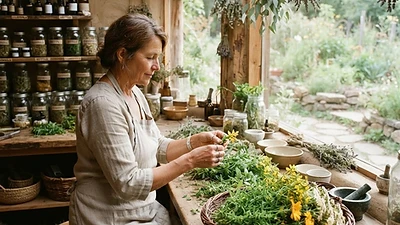
Research into regenerative development highlights that healing environments should function as active participants in their local bioregions. A restorative space should source its building materials from regional circular timber or clay, heat its facilities through localized renewable microgrids, and populate its treatment menus with plants cultivated in regenerative community agroforestry projects.
Furthermore, clinical and qualitative studies examining ecological restoration confirm that human beings experience profound nervous system regulation, reduction in depressive symptoms, and restored social cohesion when they participate directly in ecological care. When we plant trees, tend community gardens, or support landscape restoration, physical healing occurs as a natural byproduct of stewardship. The boundary between the "healer" and the "environment" dissolves.
What Regenerative Care Looks Like in Practice
Moving from extractive pampering to regenerative wellbeing spans decisions across services, products, and physical spaces:

- Therapeutic Spaces and Labor: In an extractive setting, practitioners bear high injury rates, variable hours, and systemic burnout to maintain client convenience. A regenerative clinic or sanctuary structures its entire calendar around practitioner vitality, offering fair wages, shared ownership models, adequate recovery windows, and democratic workplace governance.
- Material Sourcing in the Shop: When conscious consumers browse the conscious Shop, regenerative botanical goods are not simply labeled with standard industrial organic stamps. Instead, they trace back to verified regenerative agriculture or ethical wildcrafting collectives that enhance biodiversity, restore soil organic carbon, and protect wild herbal stands from depletion.
- Hospitality and Retreats: Regenerative Stays do not build private compounds that price out locals and drain municipal water supplies. They invest in community-led watershed restoration, employ local builders, and source seasonal, regenerative nourishment directly from neighboring agroecological farms.
- Community Nourishment: Choosing Organic Eats connects human nutritional biology with regenerative farming, ensuring that gut health and agricultural soil health reinforce one another.
The Tensions: Accessibility, Limits, and Regen-Washing
Embracing a regenerative approach introduces genuine tensions that thoughtful seekers must navigate. The first and most pressing is equity and economic access. Genuinely regenerative goods and services require living wages for practitioners, hand-harvested ingredients, and slow production processes. Consequently, regenerative care risks becoming an exclusive luxury for affluent demographics if delivery models remain confined to private market transactions.
Addressing this barrier requires community-supported models, sliding-scale therapeutic collectives, and public restorative spaces that decouple ecological integrity from elite pricing tiers. True regeneration cannot thrive inside socioeconomic silos.
The second trade-off is convenience. An extractive wellness economy provides any herb, any massage modality, and any heated facility 24 hours a day, 365 days a year. Regenerative wellness requires accepting limits: respecting seasonal availability, waiting for wild stands to replenish, and adapting treatment expectations to local climates and practitioner capacities.
Finally, we face the challenge of regulatory ambiguity. Currently, there is no statutory legal definition governing the term "regenerative" in wellness services or consumer goods. As a result, corporate brands frequently co-opt the word to rebrand standard corporate social responsibility initiatives. Seekers must remember that third-party organic, fair-trade, or carbon-neutral certifications serve as useful proxies, but they are not total guarantees of living-systems reciprocity. We must look beyond surface claims to understand underlying organizational practices.
Practical Implications for the Wellness Seeker
Cultivating a regenerative wellness practice does not require an immediate overhaul of every routine, nor does it require perfection. Instead, it invites deliberate discernment and intentional alignment. You can shift your practice through concrete actions:

- Prioritize Relational Continuity Over Transactional Variety: Rather than moving continuously between discounted introductory offers and anonymous treatment apps, build an ongoing relationship with local practitioners who operate with transparent, equitable working conditions.
- Engage in Active Stewardship: Complement passive treatments with direct restorative activities. Participating in local community garden builds, land-clearing restoration, or nature stewardship projects often regulates the human nervous system far more deeply than an isolated spa treatment.
- Scrutinize Supply Origins: Learn where the carrier oils, essential botanicals, and textiles used in your personal care originate. Support Conscious Brands that document direct, reciprocal partnerships with growers, agricultural workers, and processing communities.
- Expand Your Education: Explore curated Courses and reflective editorial work within News and Editorial on The Conscious Community to deepen your understanding of ecological interdependence.
Questions Readers Should Ask
Before booking a treatment, purchasing wellness products, or registering for restorative gatherings and Events, consider asking practitioners, businesses, and yourself these grounding questions:
- Labor and Human Care: Does this business provide fair living wages, reasonable working hours, and long-term physical support for its bodyworkers and staff, or is practitioner exhaustion subsidizing my relaxation?
- Ecological Reciprocity: Do the botanicals, clays, and materials used in this treatment enrich or deplete the ecosystems from which they were harvested? What verifiable restoration does this organization support?
- Biocultural Integrity: Does this space honor the local landscape and community history, or does it impose an imported, placeless luxury aesthetic that alienates the neighborhood?
- Personal Intent: Am I seeking this care purely as a consumable anaesthetic to help me endure an unsustainable pace, or is this practice helping me cultivate the vitality needed to participate meaningfully in my community?
From Passive Consumer to Active Steward
Choosing regenerative wellness is fundamentally an invitation to re-enter relationship. It asks us to dismantle the illusion that our bodies are self-contained machines requiring isolated tune-ups, and to see them instead as dynamic estuaries where water, air, labor, and community converge. When care ceases to be a purchase and becomes an ongoing engagement with living systems, our exhaustion ceases to feel like a private failing and reveals itself as a call for deeper participation.
This reorientation fundamentally alters how we experience rejuvenation. Healing does not arrive solely from an artisan oil applied in silence, but from knowing that the botanicals enriched an endangered pollinator corridor, that the hands offering touch are rested and fairly compensated, and that the financial exchange strengthens a local economy. In this light, genuine wellness ceases to be an escape from the world and becomes our most intimate way of restoring it.
Frequently Asked Questions
How does regenerative wellness differ from clean or sustainable wellness?
While sustainable practices focus on reducing harm or maintaining existing resource baselines, regenerative wellness actively repairs and enriches systems. It moves beyond neutral impact to measurably improve soil health, ecological biodiversity, and fair labor dynamics throughout every stage of care.
How can I identify genuine regenerative practices and avoid marketing spin?
Look for concrete transparency over expansive claims. Trustworthy practitioners and brands openly share their supply chains, labor standards, ecological partners, and seasonal limitations, rather than relying on unverified buzzwords or sweeping promises of absolute purity.
Is regenerative wellness inherently more expensive for individual seekers?
While artisanal products and fair wages often carry higher direct costs than mass-produced alternatives, regenerative living also redefines wellbeing away from continuous consumer spending. True restoration frequently centers on relational practices—such as direct contact with living soil, seasonal rest, and community mutualism—that require attention rather than financial capital.
What is the simplest way to begin adopting a regenerative approach to personal care?
Begin by auditing your current routine through a relational lens: inquire where your daily herbs originate, learn about the working conditions of your regular practitioners, and experiment with seasonal rhythms. Small shifts toward local sourcing and intentional rest ground personal health in living landscapes.